V - From Munich to Meran
Exhibition in the foyer "Architecture on tour"
03/08/2026
-
08/11/2026
Architecture on tour
Touriseum
Architecture as a “flavor enhancer,” with palm trees and small orange trees.
Meran and Bozen, the two cities in South Tyrol with particularly strong tourist trades and economies, owed their transformation – from predominantly rural conurbations to urban centres – to the transfer of architecture from north to south. Although both preserved their medieval town centres, the areas surrounding their densely built-up alleyways developed in different ways. While architects from Germany, in particular Bavaria, shaped the cityscape in Bozen, the respective influences of Munich and Vienna on Meran were relatively equal.
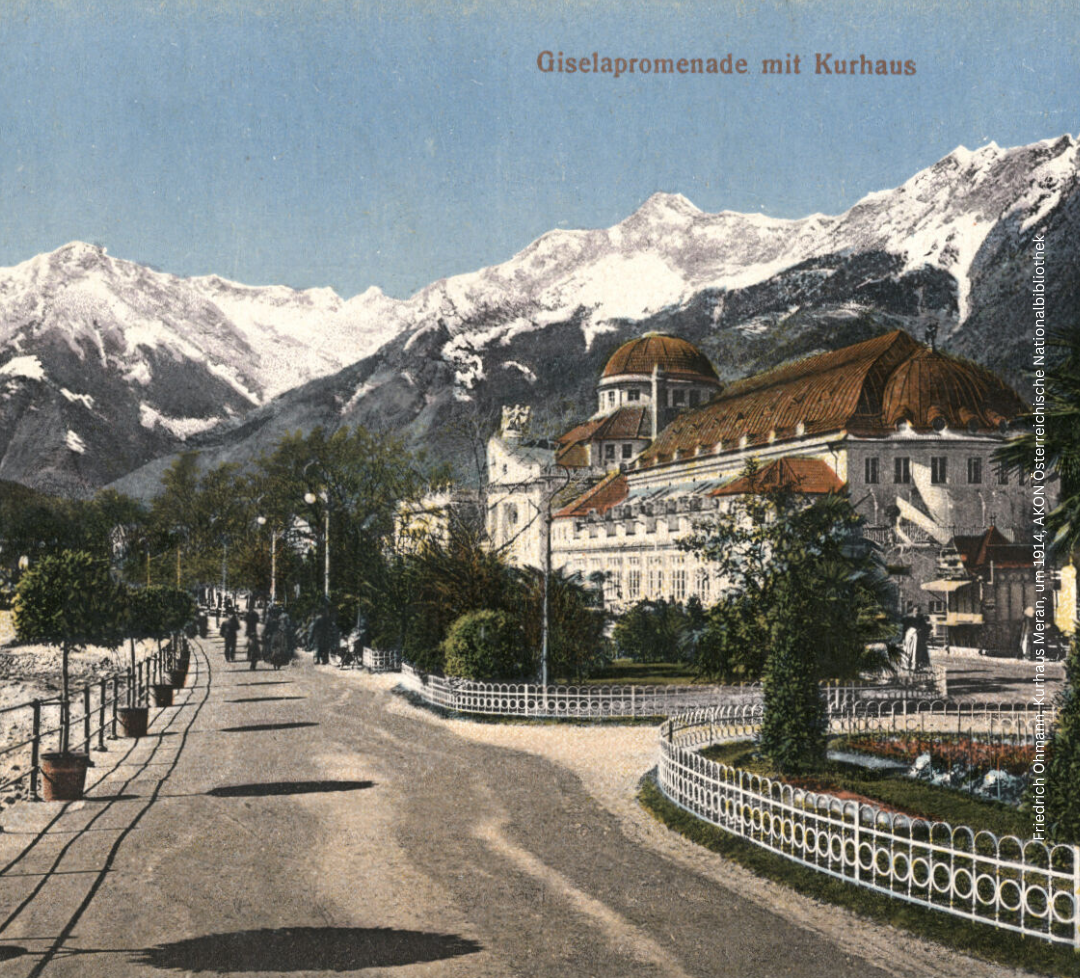
In Meran, once “taking the cure” had metamorphosed into a commercial activity, the initial architectural transfer came from Vienna. Stays by members of the House of Habsburg, including the Empress Elisabeth I (1837–1898) at Trauttmansdorff Castle in 1870 and 1889, were accompanied by completely new publicity effects. At the same time, a market for an “imperial architectural language” also emerged. Images produced for advertising purposes consequently consisted of elements that represented both the prevailing local climate and the city’s social status, with architecture used as a sort of “flavour enhancer”. This can for example be seen on postcards depicting the promenade along the River Passer lined with southern plants, such as palm trees and orange trees, against the backdrop of the Kurhaus, itself symbolising the supremacy of the Austrian monarchy.
Bettina Schlorhaufer
Curious? We’ll explore the topic further next month: