
Daffodils
Category: bulbous plant

General position
sunny to partially shaded
Location in Trauttmansdorff
throughout the gardens, especially in the Clematis Collection (E-F 3 on the map) and the Fern Valley (B 3 on the map)

Irrigation
low to moderate

Hardiness
excellent

Height
20–45 cm

Flowering period/attractiveness
March–April
Ø Peak flowering in Trauttmansdorff
1st week pf april
General description
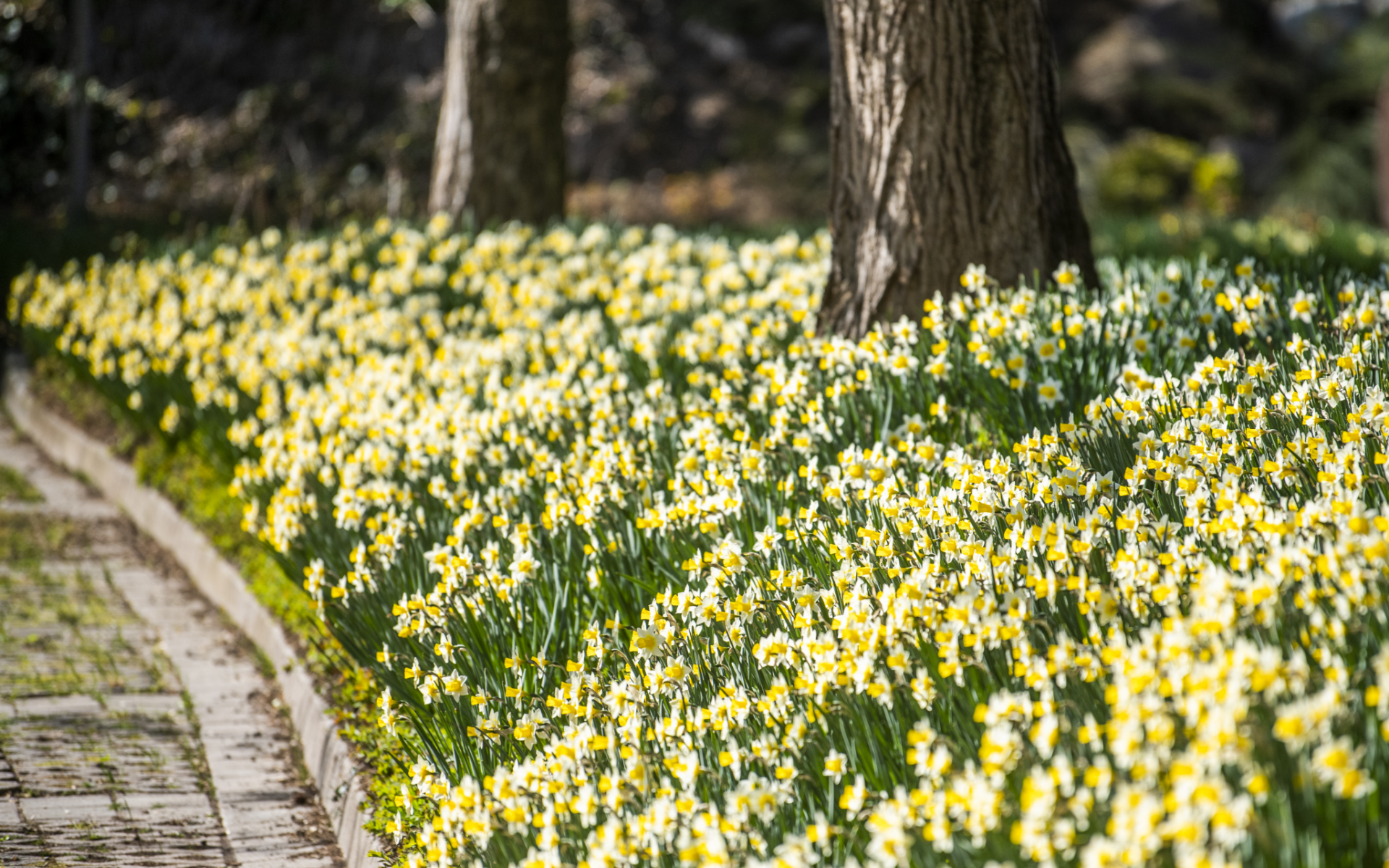
Daffodils are among the most reliable messengers of spring, bringing colour into the garden early each year. With their bright yellow and white tones, they appear like small bursts of light, gently pushing winter aside. Many species are native to Europe and the Mediterranean, where they grow naturally in open meadows and along woodland edges.
What makes daffodils so special is their cheerful presence combined with remarkable resilience. Once planted, they return year after year and often multiply on their own. Their characteristic trumpet- or star-shaped flowers vary widely in form and size, depending on the variety.
Daffodils feel at home both in formal beds and in more naturalistic plantings. They are especially effective when planted in groups or scattered loosely among grasses and shrubs. In these settings, they create a relaxed, almost spontaneous effect, as if they had always been part of the landscape.
As classic spring flowers, they combine beautifully with other early bloomers, creating lively and harmonious garden scenes. With their simplicity, longevity, and radiant colour, daffodils remain an essential part of spring garden design.
Care
Daffodils thrive in partial shade as long as the soil is not too wet in winter and not completely depleted in summer. Allowing the foliage to die back completely after flowering remains essential. They require very little care and are ideal for naturalising, especially in woodland-style garden areas.
Special features & use in the home garden
Daffodils are ideal for natural gardens, woodland edges, and meadows. They are particularly effective when planted in groups. They are resistant to pests and are not eaten by deer — an advantage in open gardens. Their early flowering combines beautifully with climbing plants, grasses, and ground-cover perennials. In naturalistic planting, the daffodils in the Fern Valley serve as a perfect example: minimal effort, maximum spring impact. They pair well with shade-loving plants such as hostas, ferns, and early wood anemones.
In Trauttmansdorff
In the Clematis Collection, daffodils create the first wave of colour before clematis and roses take over in summer. In the Fern Valley, they bring a bright spring glow among the deep green plant structures.

Price: €0.00*