I - Architecture. Travel. Politics.
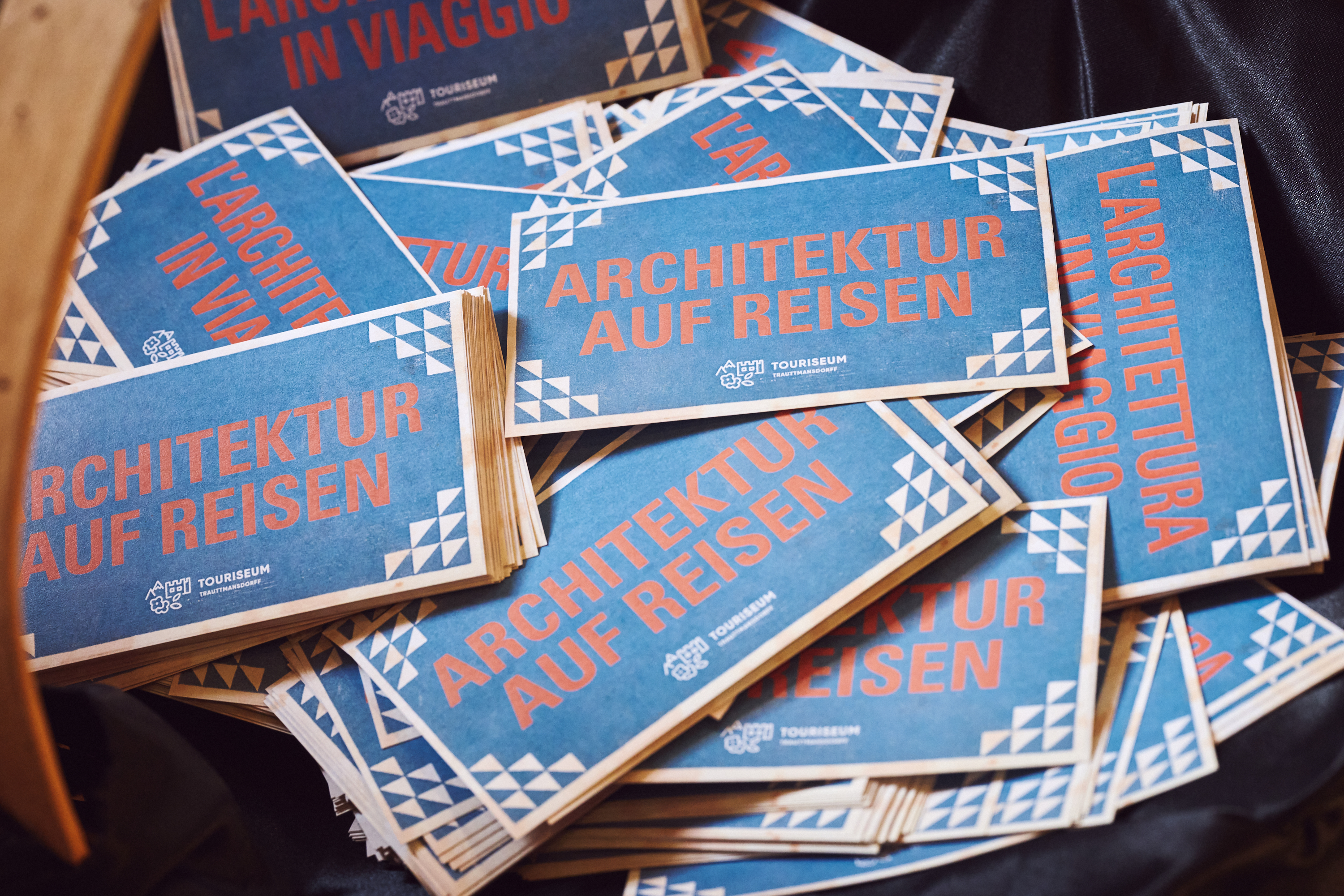
Exhibition in the foyer "Architecture on tour"
01/04/2026
-
08/11/2026
Architecture on tour
Touriseum
“Not all travellers go via paths.”
From a poem by Conceição Evaristo
People travel for many different reasons: to visit health resorts or summer retreats, to undertake family reunions or business trips, for pleasure or out of necessity. In the past, travel was arduous and the opportunities for comfort along the way were rare. This only changed with the advent of new technologies in the fields of transport and accommodation. Unlike the physical transportation of people, transfers do not always “go via paths”: thus money and goods, intellectual property and influence can all be transferred.
As we know, tourism has the power to conquer territories. It contributes to change and, in the best case scenarios, will bring wealth and prosperity. However, countless examples from history also bear witness to the transfer of power. Political authority was not only transferred in the forms of violence or law, but also found symbolic application. And which symbols were better suited to this purpose than architecture – a medium that expresses itself through its sheer mass and can convey even subtle messages, from formal gestures to delicate decorations?
“Architecture on tour” is both the title and image of the inseparable connection between architecture and power, politics and economics, using the example of the Belle Époque in Bozen and Meran: building works that ensured quality in terms of tourism, but whose codes were simultaneously also used as instruments with which to convey ideological content.
Alongside practitioners from Vienna, architects from Munich and southern Germany helped transfer their expertise in construction and artistic talent to South Tyrol, in the process shaping locations and landscapes. The brothers Alois (1872–1969) and Gustav Ludwig (1876–1952) here played a particularly important architectural role as, during the transitional period of regional development from around 1900 to 1914, they created buildings at several places in South Tyrol whose particularly durable nature has permitted their continuous use since their construction: many are now listed as protected monuments. The buildings realised by the brothers are characterised by their “modernised Baroque” style that they embellished with elements from other eras, not to mention contemporary artistic elements. They also made use of innovative materials such as concrete, as well as technical advancements such as electricity.
Bettina Schlorhaufer
Next month we continue with new insights on